Why Modern Furnaces Lock Out & When DIY Checks Are Safe
Modern high-efficiency furnaces are engineered with sophisticated electronic control boards and multi-tiered safety switches. When any sensor detects abnormal temperature, restricted combustion airflow, or incomplete ignition, the microprocessor executes a protective safety lockout to prevent carbon monoxide poisoning, fire hazards, or electrical shorts.
While internal gas valves, electronic spark modules, and draft inducers must be serviced strictly by certified HVAC technicians, several common heating shutdowns are caused by simple external factors that homeowners can safely verify in under ten minutes.
Before picking up tools or calling for service, take a systematic approach. Follow these seven verified checks in sequence to determine whether your heating failure is an easily corrected oversight or requires professional mechanical dispatch.
Need In-Person Heating Diagnostics in Southern NH?
Our Merrimack technicians carry diagnostic equipment and replacement parts on every dispatch. Call to discuss your heating system.
- Fast 10–25 minute arrival across Merrimack, Nashua & Manchester
- Upfront diagnosis & written estimate before any work begins
- Full service for natural gas, fuel oil, and propane equipment
Merrimack Hub
454 Daniel Webster Hwy
Rapid Dispatch
10–25 Min Metro Arrival
Upfront Pricing
Clear Quotes Before Work
Multi-Fuel Pro
Gas, Oil & Propane Systems
The 7 Essential Homeowner Furnace Diagnostic Checks
Work through each of these checks carefully before calling a service technician:
Check 1: Thermostat Settings, Mode & Battery Power
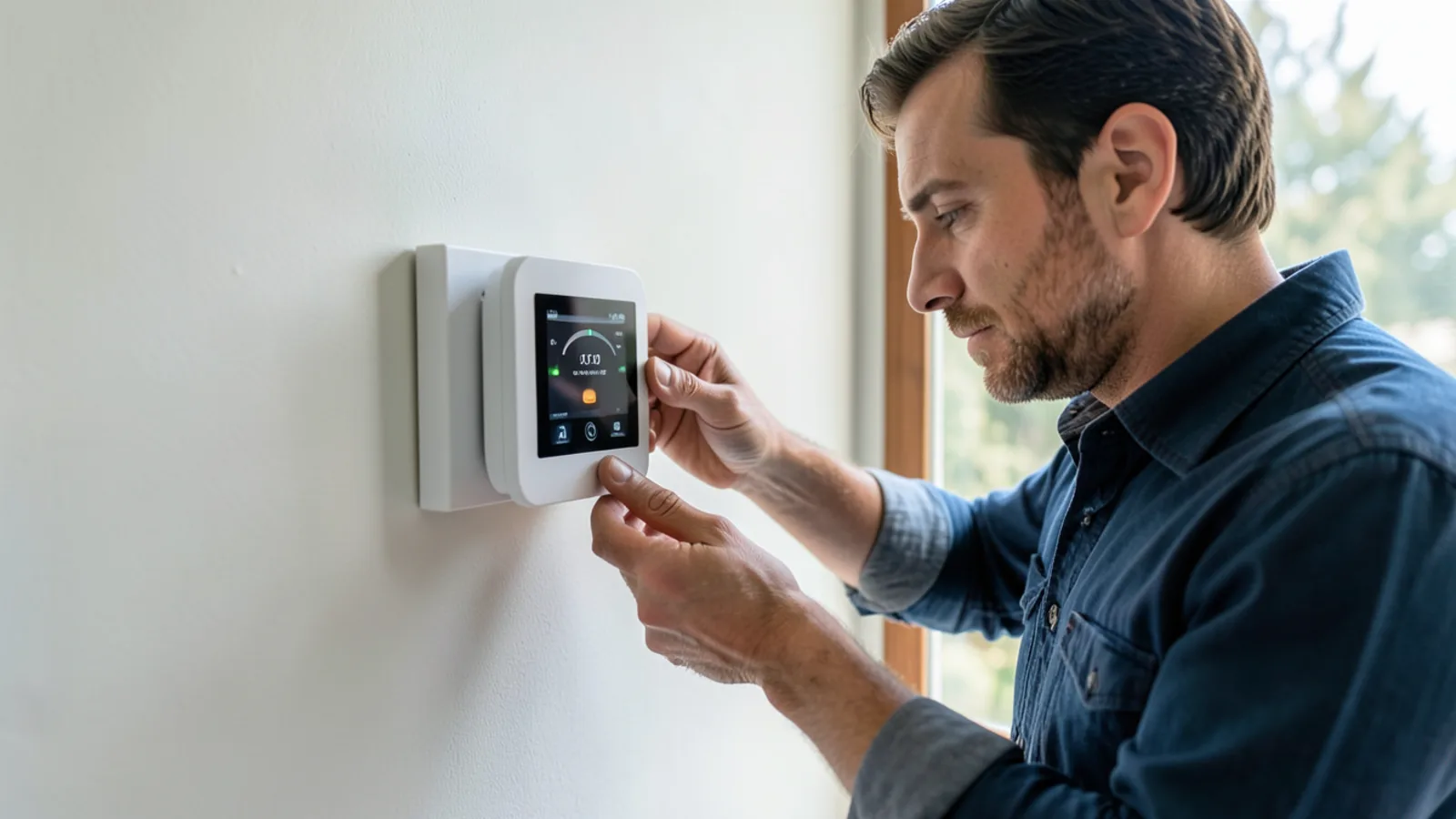
Ensure your thermostat is firmly switched to 'HEAT' and the temperature setpoint is at least 5°F above the current room temperature. If the display is dim, flickering, or completely blank, replace the AA or AAA alkaline batteries immediately. Many smart thermostats also lose connection or freeze after minor electrical glitches; cycling the thermostat off and back on can trigger a fresh heating call.
Check 2: Emergency Cutoff Switches at Basement Stairs
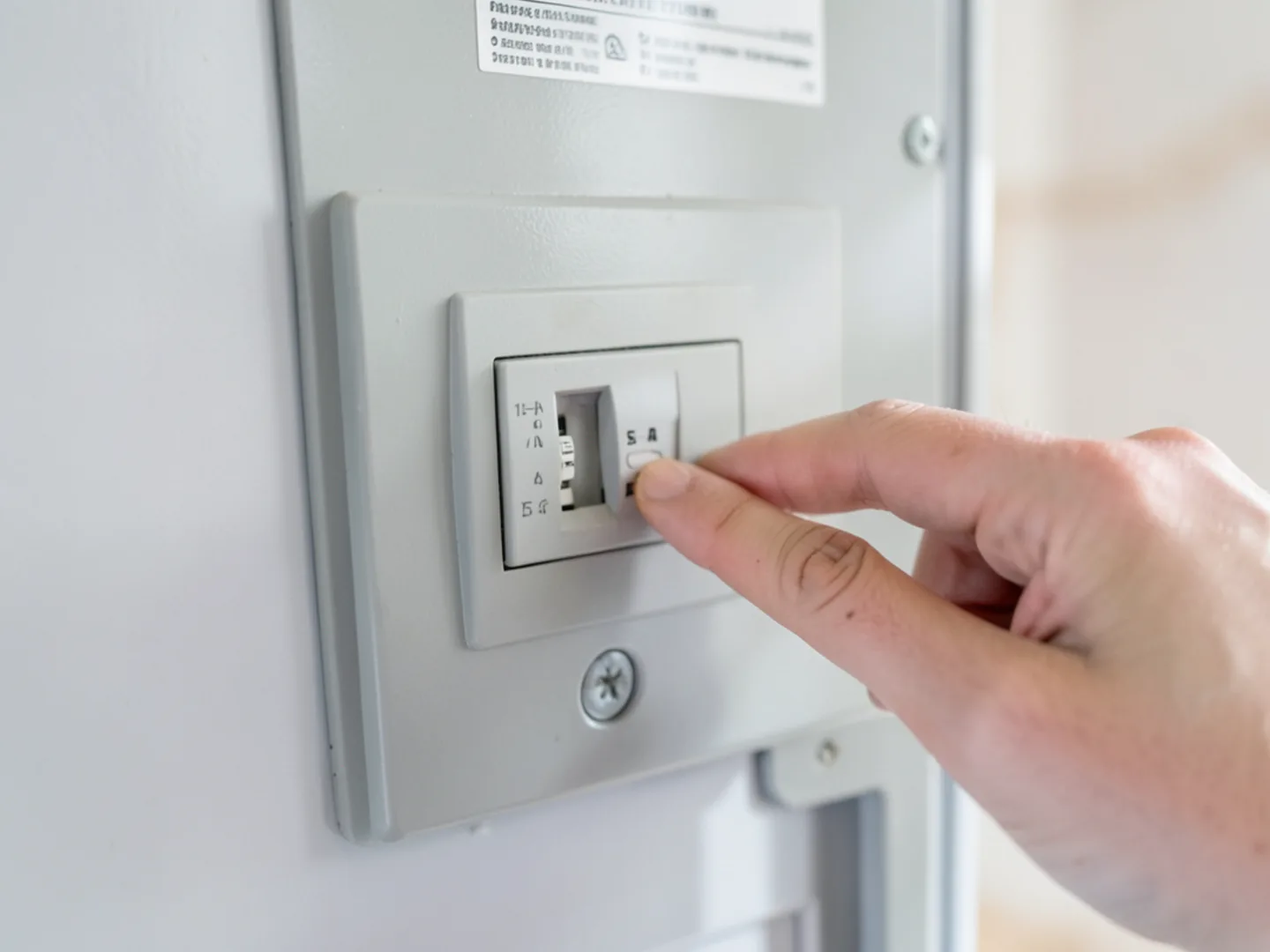
Every New Hampshire furnace has a dedicated red-plate electrical disconnect switch located at the top of the basement stairs or directly mounted on the furnace cabinet. These switches are frequently flipped by accident when family members mistake them for basement light switches. Ensure the toggle is flipped firmly to 'ON'.
Check 3: Main Electrical Service Panel Circuit Breakers
Locate your home's main breaker panel and find the circuit labeled 'Furnace' or 'Heating'. A brief power surge can cause the breaker to trip into the center position. To reset it properly, push the breaker firmly to the 'OFF' position until it clicks, then firmly flip it back to 'ON'.
Check 4: Furnace Cabinet Blower Access Door Interlock
Furnace cabinets feature a spring-loaded safety interlock switch behind the lower blower compartment door. If the door was removed during filter changes and not reseated securely, the safety switch remains open, completely cutting 120-volt power to the entire unit. Press the door firmly into its alignment tracks.
Check 5: Air Filter Cleanliness & High-Limit Reset
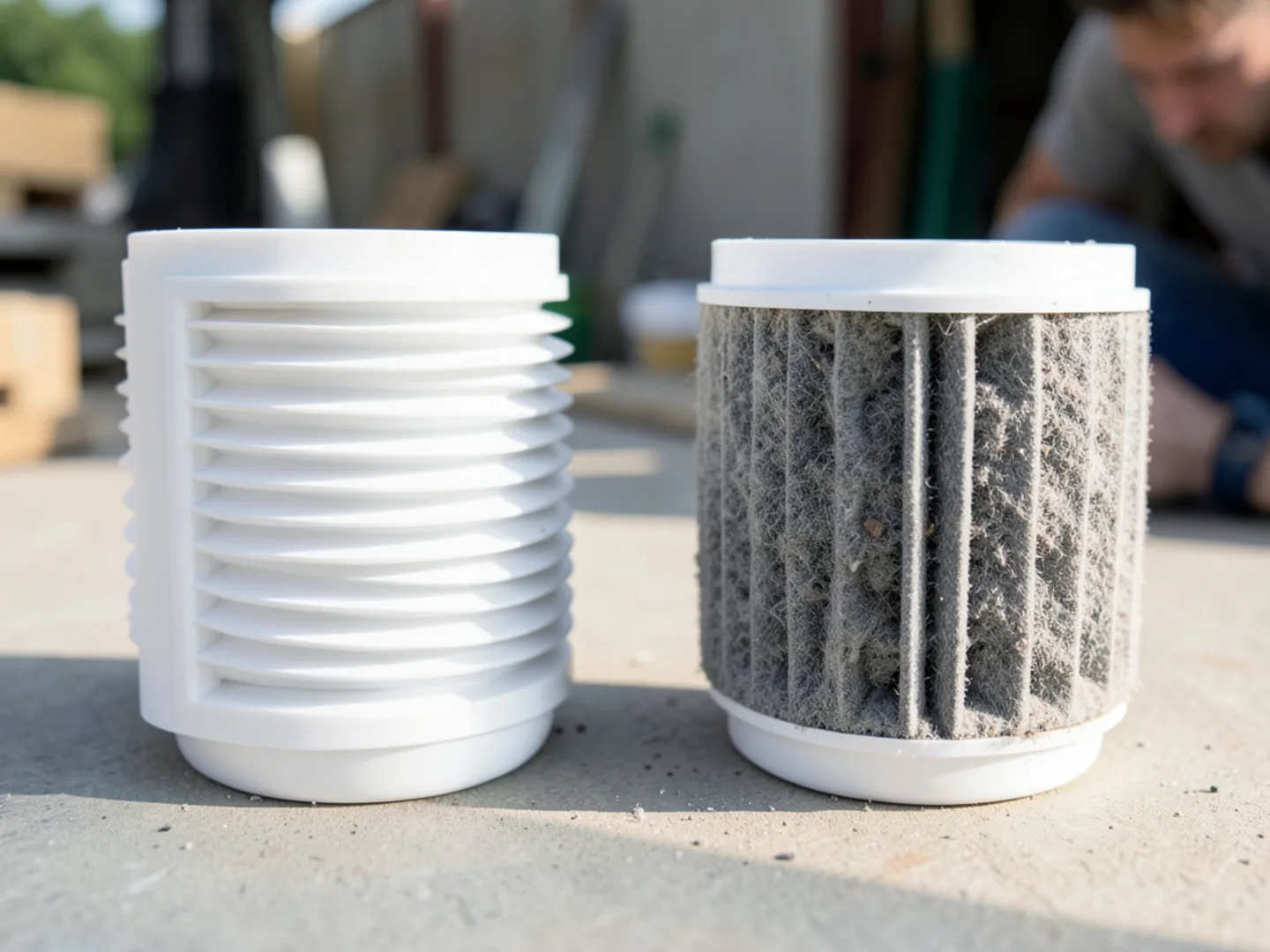
A severely clogged, dust-matted furnace filter restricts airflow across the combustion heat exchanger. Within minutes, temperatures inside the plenum soar above safe operating limits, tripping the automatic high-limit safety cutoff. Inspect your 1-inch or 4-inch filter; if it appears gray or coated in pet hair, replace it immediately and wait 15 minutes for the safety switch to cool and auto-reset.
Check 6: Condensate Drain Lines on High-Efficiency Condensing Furnaces
If your furnace has white Schedule 40 PVC exhaust venting, it is a high-efficiency 90%+ condensing system that generates gallons of water daily. If the internal P-trap or external vinyl drain line becomes blocked with algae, sediment, or winter ice, water backs up into the internal reservoir, tripping a condensate overflow float switch that cuts power to the burner.
Check 7: Outdoor PVC Combustion Intake & Exhaust Pipe Terminations
Inspect the exterior sidewall of your home where the white PVC pipes exit through the foundation. During southern New Hampshire snowstorms, blowing snowdrifts, roof drip line ice, or nesting critters can completely obstruct the intake or exhaust terminations. Blocked pipes starve the furnace of combustion oxygen, causing the differential pressure switch to lock out ignition.
Reading Your Furnace Diagnostic LED Blink Codes
Most modern furnaces feature an inspection peephole on the lower access panel through which you can view a small diagnostic LED mounted directly on the integrated circuit board.
When an error occurs, the LED blinks in a specific pulse sequence (e.g., 2 flashes, 3 flashes, or alternating fast/slow blinks). A diagnostic key is pasted on the inside of the furnace blower access panel.
Observing and recording this blink pattern before calling our dispatch team allows our technicians to arrive with the exact replacement components required for your specific model.
| Flash Code Sequence | Common Meaning | Mechanical Component Involved | Recommended Action |
|---|---|---|---|
| Steady Fast Blink | Normal heating demand | Thermostat circuit active | System operating normally |
| 2 Blinks | Pressure switch stuck open | Draft inducer motor or vent pipe | Check outdoor PVC pipes for snow obstruction |
| 3 Blinks | Pressure switch stuck closed | Internal switch contacts welded | Requires professional switch replacement |
| 4 Blinks | High-limit circuit open | Overheated heat exchanger or filter | Replace air filter; verify supply registers open |
| 5 Blinks | Flame rollout safety open | Compromised heat exchanger or draft | SHUT OFF IMMEDIATELY; call professional |
| Continuous Slow Flash | Flame sensed with no gas call | Leaking gas valve or sensor short | Shut off gas supply valve; call for repair |
Understanding the Furnace Sequence of Operation
Understanding the exact mechanical sequence your furnace follows when starting helps you pinpoint precisely where a failure is occurring before calling a technician. Every modern electronic ignition gas furnace follows this strict 6-phase operational protocol:
First, the wall thermostat closes its 24-volt heating circuit (R to W), signaling the integrated control board. Second, the small draft inducer fan motor energizes, purging the combustion chamber of residual gases and pulling a vacuum that closes the safety differential pressure switch.
Third, once the pressure switch closes, the silicon nitride hot-surface igniter receives 120 volts, glowing bright yellow-white within 15 to 20 seconds. Fourth, the 24-volt gas valve solenoid clicks open, releasing natural gas or propane across the burner orifices to ignite instantly across the burner face.
Fifth, within 4 seconds of flame ignition, the flame sensor rod must detect a continuous DC microamp current through the ionized flame. If flame rectification is verified, the gas valve stays open. Sixth, after a 30-to-60 second heat exchanger warm-up delay, the main indoor blower motor starts, distributing warm air through your ductwork. If your furnace stalls at any step, our technicians can quickly diagnose which safety switch failed to satisfy.
Expert Insight: Flame Rectification Physics & The Myth of Steel Wool Cleaning
One of the most widely circulated DIY plumbing and heating tips online advises homeowners to clean a dirty flame sensor with whatever abrasive they have in their garage—often coarse sandpaper, emery boards, or steel wool. In practice, this advice frequently ruins the component and leaves the homeowner without heat on a freezing night.
A flame sensor does not measure heat like an antique bimetallic thermocouple; it measures electrical conductivity through ionized combustion gases. When the burner fires, AC voltage applied to the sensor rod is converted to a minute direct current (DC microamps, or µA) flowing through the flame to the grounded burner face. The furnace control board expects to measure between 2.0 and 6.0 microamps. If silica, airborne dust, or carbon deposits coat the metal rod, the current drops below 1.0 µA, and the board instantly shuts down the gas valve.
When well-meaning homeowners scrub the sensor with steel wool, tiny microscopic fragments of steel flake off and lodge between the metal rod and the white ceramic insulator. These metal fibers create a dead electrical short to ground, permanently blinding the control board. Furthermore, coarse sandpaper scratches deep grooves into the sensor rod, accelerating future oxidation buildup. Professional HVAC technicians use ultra-fine non-metallic abrasive cloth and verify exact microamp signal strength with a calibrated digital multimeter before concluding service.
When to Stop DIY Checks & Call a Certified Professional
While checking filters, breakers, and switches is completely safe, you must draw the line at handling internal gas controls, electrical wiring, or combustion components.
If you smell gas or unignited fuel oil, hear loud metallic screeching or booming delayed ignition sounds, or see soot staining around the furnace cabinet, discontinue DIY checks immediately. Shut off electrical power to the unit and call our Merrimack diagnostic specialists at (321) 666-8870.
Our technicians carry calibrated digital manometers, combustion analyzers, and universal replacement parts to safely diagnose and repair your heating system with upfront written pricing.
Common Questions on this Topic
Practical answers from our experienced HVAC service technicians.
This classic symptom—known as flame rollout or flame rectification failure—almost always points to an oxidized flame sensor rod. The burner ignites, but the sensor fails to register microamp current within 4 seconds, causing the computer board to cut the gas valve for safety.
Have a question about your specific heating system or fuel type?
Speak directly with a local technician to discuss symptoms and dispatch options.
Call Our Dispatch Desk: (321) 666-8870