AC Repair & Installation in Merrimack, NH
Rapid central air conditioning diagnostics, seasonal tune-ups, and energy-efficient condenser replacements across Merrimack and the southern NH corridor.
Merrimack Hub
454 Daniel Webster Hwy
Rapid Dispatch
10–25 Min Metro Arrival
Upfront Pricing
Clear Quotes Before Work
Multi-Fuel Pro
Gas, Oil & Propane Systems
Service Standards & Guarantees
- Fast dispatch during hot, humid southern New Hampshire summer heatwaves
- Full truck inventory of contactors, dual-run capacitors & fan motors
- Digital subcooling & superheat refrigerant charge verification
- Precision duct airflow balancing and condensate drain clearing
Fast Diagnostics for Central Air Systems Not Cooling
While New Hampshire is renowned for frigid winters, July and August along the Merrimack River valley bring intense humidity and peak temperatures climbing into the 90s, averaging up to 23 days above 90°F annually. When your central air conditioner fails during a mid-summer heatwave, indoor humidity spikes rapidly and living spaces become uncomfortably oppressive.
Our cooling diagnostics begin by measuring the exact temperature differential (delta-T) across your indoor evaporator coil. In a properly charged, balanced system, the air leaving your supply registers should measure 16°F to 21°F cooler than the room air returning through your intake grilles.
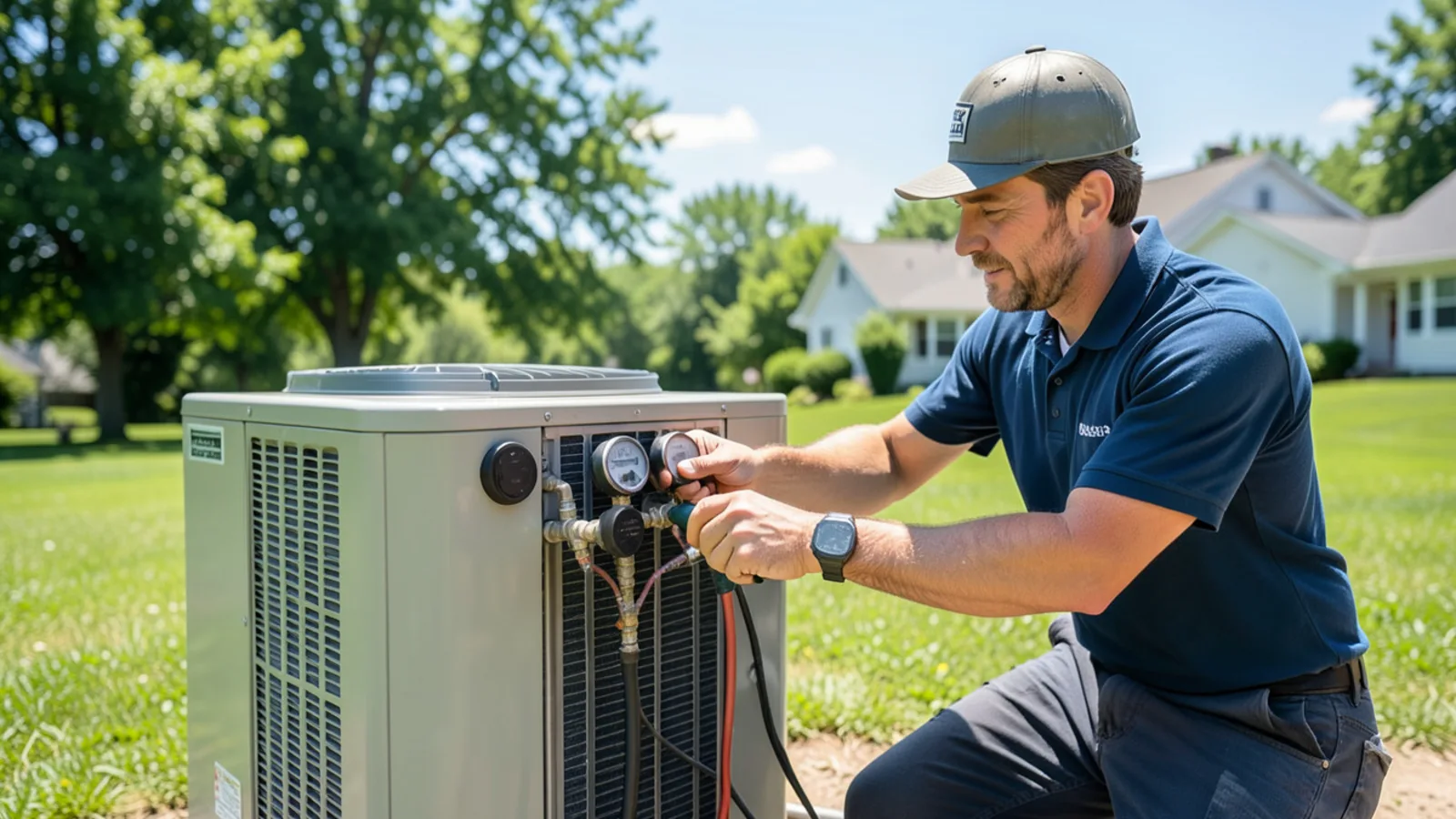
If your delta-T drops below 14°F, your system is running continuously without dehumidifying or cooling. We hook up precision digital gauges to verify operating suction and liquid pressures, calculating real-time subcooling (on thermal expansion valve systems) and superheat (on fixed orifice systems) to determine whether the root failure is an airflow restriction, a failed electrical capacitor, or a slow refrigerant leak.
- Outdoor condenser fan is spinning but indoor supply vents blow warm or room-temperature air
- Thick white frost or solid ice coating the indoor evaporator coil or the outdoor brass suction service valve
- Outdoor condensing unit produces a loud humming, buzzing, or clicking noise without compressor ignition
- Water overflowing from the attic air handler drain pan or safety float switch shutting down the thermostat
- Circuit breaker tripping immediately inside the main electrical panel whenever the cooling cycle calls
Experiencing Issues With Your AC Repair & Installation?
Call our Merrimack diagnostic desk directly. Speak with an experienced technician who will explain your options and dispatch help promptly.
- Fast 10–25 minute arrival across Merrimack, Nashua & Manchester
- Upfront diagnosis & written estimate before any work begins
- Full service for natural gas, fuel oil, and propane equipment
Merrimack Hub
454 Daniel Webster Hwy
Rapid Dispatch
10–25 Min Metro Arrival
Upfront Pricing
Clear Quotes Before Work
Multi-Fuel Pro
Gas, Oil & Propane Systems
Common Summer AC Breakdowns: Capacitors, Contactors & Leaks
Air conditioning systems endure intense electrical and thermal stress during peak summer afternoon runs. In southern New Hampshire, the vast majority of cooling service calls trace to three common mechanical failures.
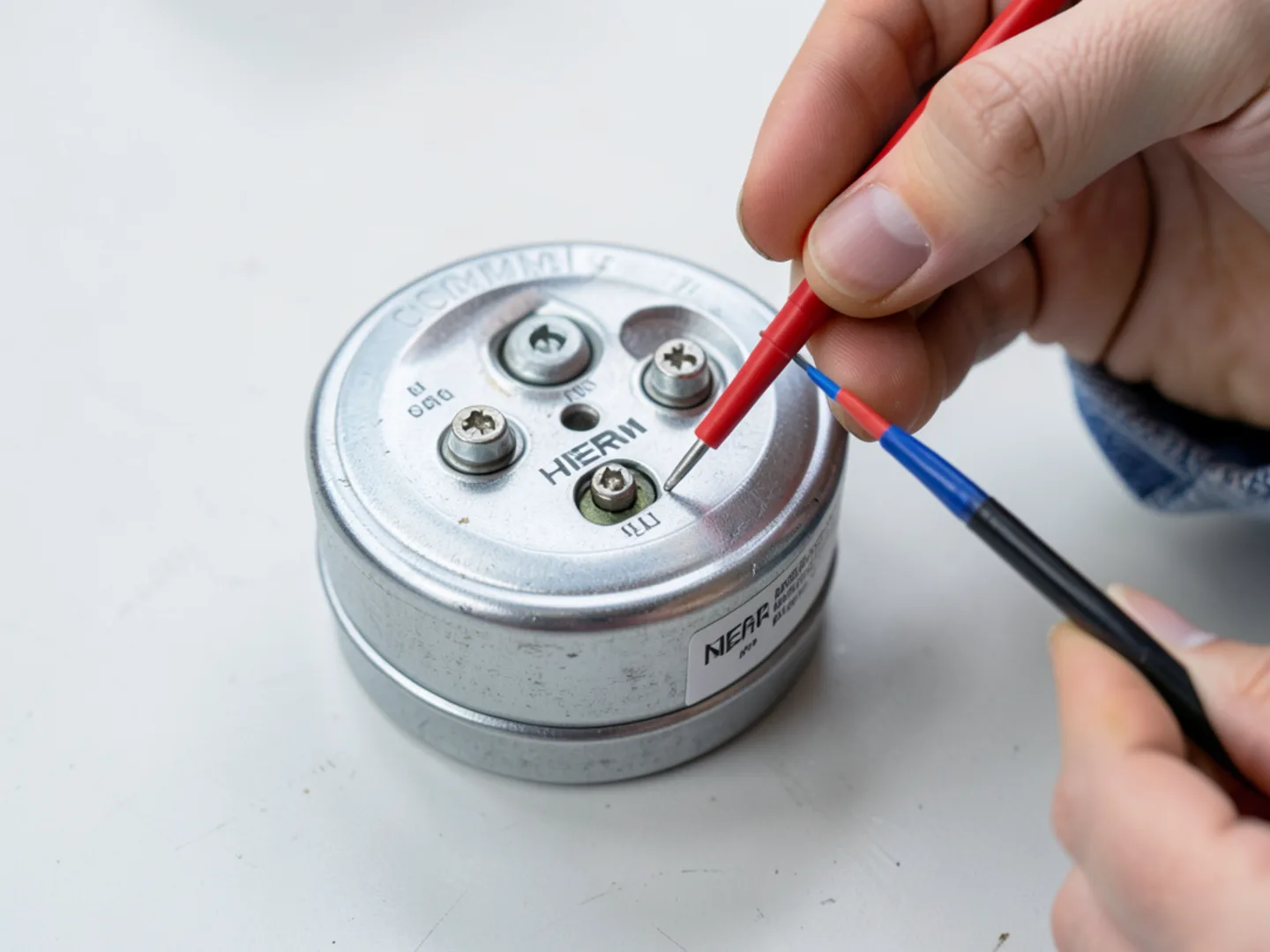
First, dual-run capacitors provide the initial electrical phase-shift required to start and run both the hermetic compressor and the outdoor condenser fan motor. Heat and summer voltage fluctuations cause the dielectric fluid inside capacitors to degrade, causing them to bulge and lose capacitance. When a capacitor drops more than 5% below its rating, the compressor hums and trips on thermal overload.
Second, electrical contactors act as high-voltage switches. Over years of cycling, electrical arcing pits and oxidizes the silver contacts. Pitted contactors cause voltage drops that starve compressor windings of power, or stick closed, causing the outdoor unit to run continuously even when the thermostat satisfies.
Third, microscopic corrosion on indoor evaporator coils can cause slow refrigerant leaks. When refrigerant levels drop, pressure inside the evaporator plummets below 32°F, causing moisture in the air to freeze into a solid block of ice across the coil fins, completely choking airflow.
Our 6-Step Central Air Diagnostic & Repair Sequence
We never guess at air conditioning faults or randomly dump refrigerant into leaking systems. When our service van arrives at your home, our technician follows an exhaustive six-step diagnostic sequence to restore peak cooling efficiency.
Step 1: Airflow & Delta-T Temperature Split Verification
We measure dry-bulb and wet-bulb temperatures at supply and return plenums using calibrated digital psychrometers, verifying whether the evaporator is achieving a healthy 16°F to 21°F cooling split.
Step 2: High-Voltage Electrical & Capacitor Microfarad Audit
We test incoming line voltage, disconnect fuses, and contractor points under electrical load. We test the dual-run capacitor with a true-RMS multimeter to verify microfarad (µF) ratings within ±5% of factory specifications.
Step 3: Outdoor Condenser Coil Airflow & Heat Rejection Analysis
We inspect aluminum condenser fins for blockage from cottonwood seeds, grass clippings, and road grime. We measure condenser fan motor amperage against rated full-load amps (FLA) to ensure unrestricted thermal rejection.
Step 4: Digital Manifold Subcooling & Superheat Refrigerant Analysis
Using wireless digital manifold gauges and pipe-clamp thermistors, we calculate saturation temperatures to determine exact subcooling (standard 8°–12°F on TXV systems) and superheat, isolating refrigerant charge accuracy from metering valve restrictions.
Step 5: Condensate Drain Nitrogen Blowout & Float Switch Safety Test
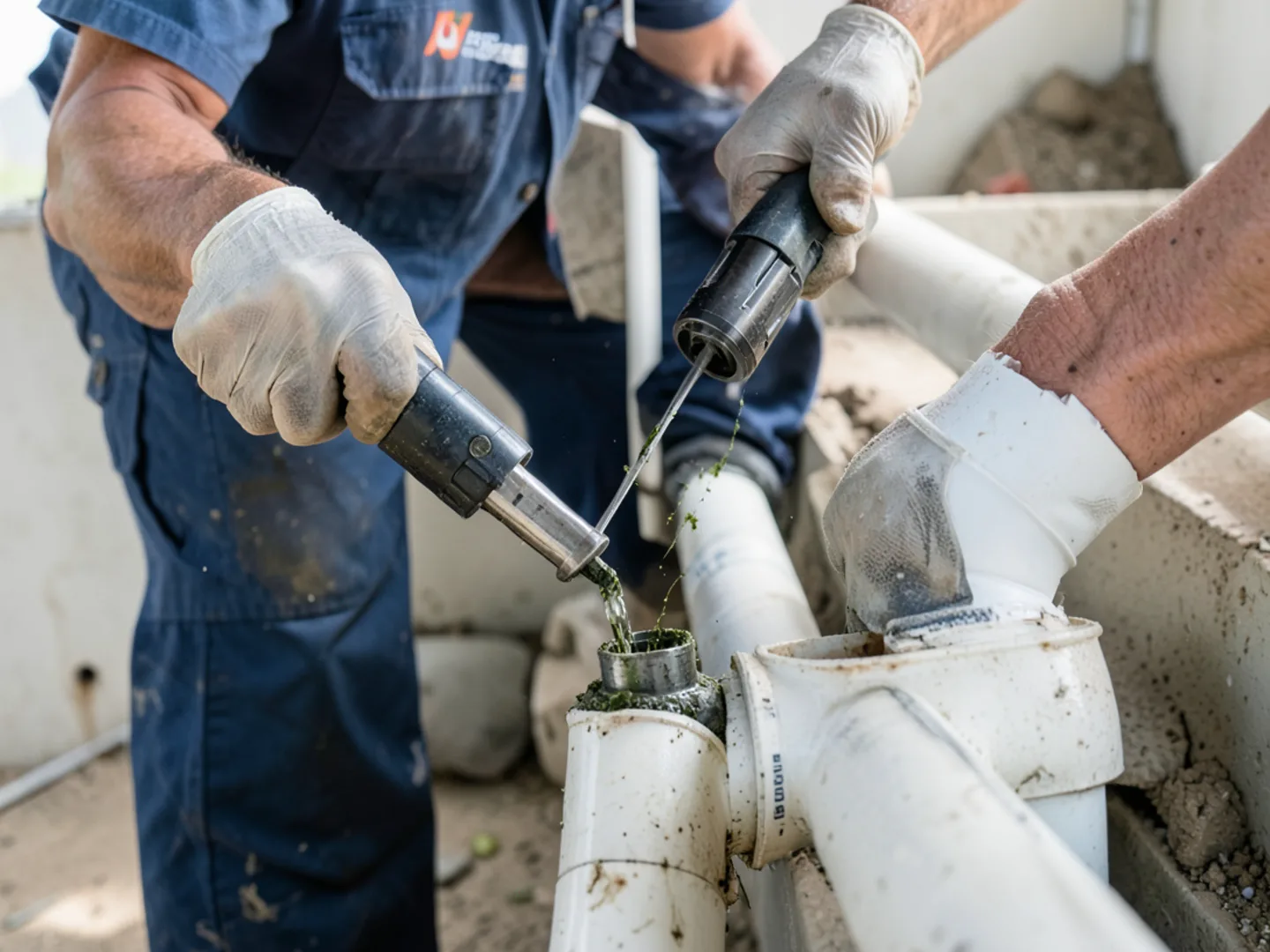
We blast high-pressure nitrogen through the 3/4-inch PVC condensate line to clear algae slime, clean the P-trap, and test auxiliary float safety switches to guarantee attic drain pans never overflow.
Step 6: EPA Section 608 Electronic Refrigerant Leak Sniffing
If refrigerant is low, we utilize heated-diode electronic leak detectors and ultrasonic acoustic sensors along copper return bends and service valves to pinpoint microscopic leaks before adding fresh charge.
Seasonal AC Tune-Ups, Coil Cleaning & Airflow Balancing
Preventative cooling maintenance pays for itself by preventing emergency service calls and lowering electrical utility bills. In suburban New Hampshire neighborhoods with cottonwood trees, pine pollen, and road dust, outdoor condenser fins become choked with airborne debris.
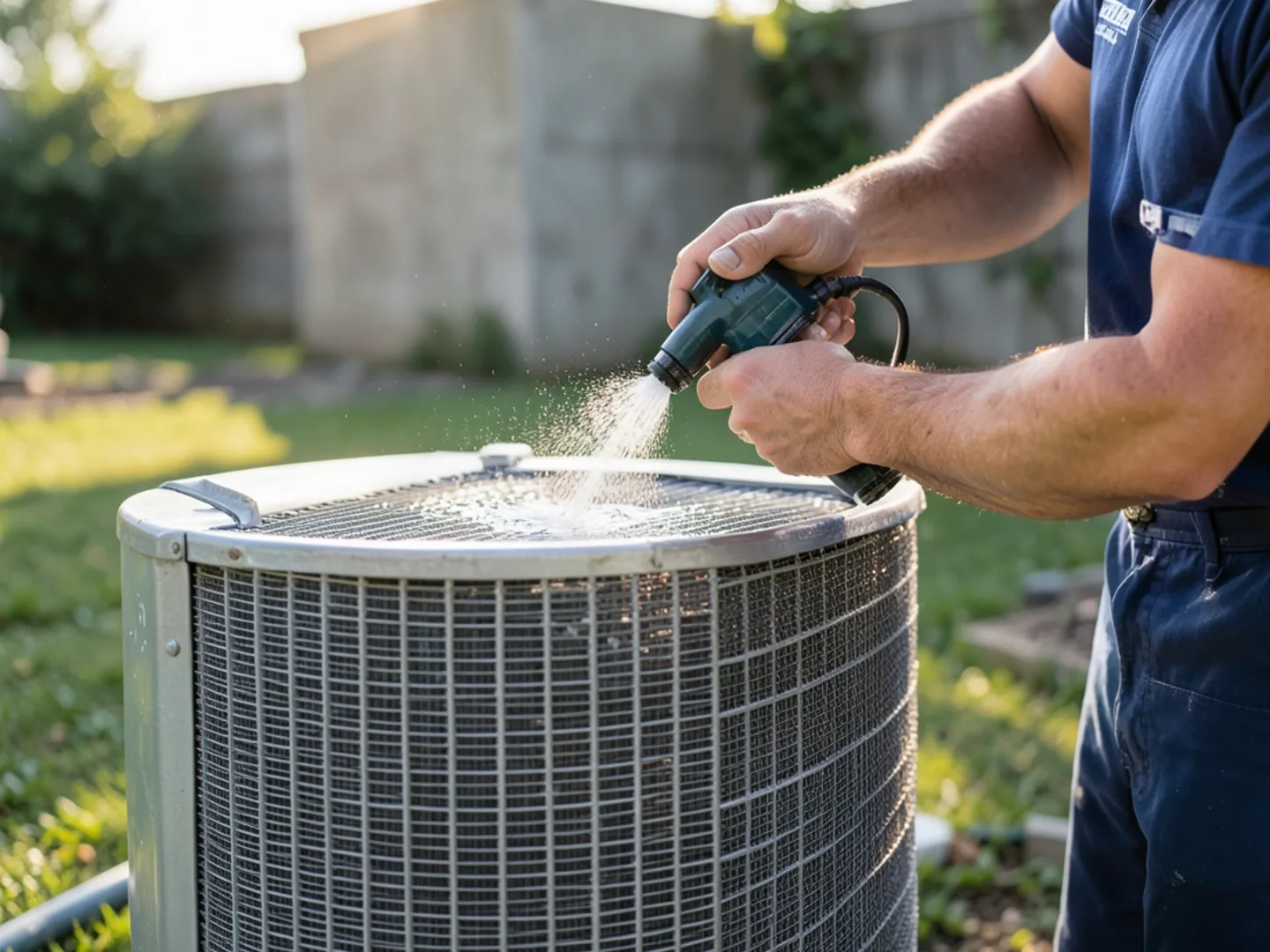
Our comprehensive AC tune-up applies specialized foaming cleaner to deep-clean the aluminum condenser fins, flushes the indoor condensate drain line with nitrogen, tests the condensate safety float switch, tests motor electrical draw against rated locked-rotor amps (RLA), and verifies thermostat calibration.
We also measure total external static pressure across your return and supply plenums. A high static pressure reading (exceeding 0.5 to 0.8 inches of water column) indicates restricted ductwork or an overly dense air filter, which chokes air circulation, causes coil frosting, and causes ECM blower motors to overheat prematurely.
| Diagnostic Checkpoint | Operational Standard | System Performance Benefit |
|---|---|---|
| Evaporator Delta-T | 16°F – 21°F Temperature Drop | Confirms adequate sensible cooling and room dehumidification |
| Dual-Run Capacitor | Within ±5% of µF Label Rating | Prevents compressor hard-starts and fan motor burnouts |
| Liquid Line Subcooling | 8°F – 12°F (TXV metering) | Verifies correct liquid refrigerant feed to the indoor expansion valve |
| Suction Superheat | 10°F – 15°F (Fixed orifice) | Prevents liquid refrigerant floodback from destroying compressor pistons |
| Static Pressure (TEAS) | < 0.50" to 0.70" W.C. | Ensures optimal CFM airflow volume across the indoor coil |
EPA Section 608 Rules, Town Permitting & Refrigerant Transition
Air conditioning repair and installation is strictly regulated under federal and local environmental statutes. Under Section 608 of the Federal Clean Air Act, all technicians handling refrigerants must hold EPA Universal Certification. Venting refrigerants (such as R-410A or legacy R-22) into the atmosphere is strictly illegal, carrying severe federal penalties.
Our service technicians recover all refrigerants into dedicated, DOT-approved recovery cylinders using certified recovery equipment. In the Town of Merrimack, outdoor condensing unit replacements require a standard $75 mechanical permit from the Building Division to ensure electrical disconnect sizing and property line setbacks comply with local building codes.
Why Merrimack Homeowners Choose Puzzled Comfort for AC Service
Puzzled Comfort HVAC is centrally based at 454 Daniel Webster Highway, Suite 4 in Merrimack. During blistering summer heatwaves, our technicians are dispatched immediately across Route 3 and the Everett Turnpike, reaching Merrimack, Nashua, Bedford, and Manchester homes in an average of 10 to 25 minutes.
We carry universal dual-run capacitors, heavy-duty contactors, condenser fan motors, hard-start kits, and electronic float switches on every service truck, enabling us to restore cool comfort on the initial visit in over 85% of cooling service calls. We provide upfront written pricing before turning a single wrench.
What Factors Influence Air Conditioning Repair Costs in Merrimack?
We believe in 100% transparent pricing. You will always receive a full explanation of the failure and an upfront written quote before our technician turns a single wrench.
The overall cost of an AC repair is driven by several factual technical factors: whether the repair is a straightforward electrical component replacement (such as a dual-run capacitor or contactor) versus an advanced refrigeration repair (locating a leak, brazing copper joints, nitrogen pressure testing, deep vacuum evacuation, and virgin refrigerant recharging), the refrigerant type (phased-out legacy R-22 versus current R-410A), and access difficulty in attic air handlers.
Our mobile service vans carry universal parts, allowing us to resolve the vast majority of cooling outages on the spot without expensive secondary visits.
Frequently Asked Questions About AC Repair & Installation
Straightforward answers to the most common questions our technicians receive on the job.
Ice forms when the indoor evaporator coil temperature drops below 32°F. This is almost always caused by severely restricted airflow (such as a dirty 1-inch air filter or closed vents) or a leak causing low refrigerant charge. Turn the system off at the thermostat immediately to prevent catastrophic compressor liquid slugging.
Have a question about your specific heating system or fuel type?
Speak directly with a local technician to discuss symptoms and dispatch options.
Call Our Dispatch Desk: (321) 666-8870Ready for Reliable AC Repair & Installation?
Call Puzzled Comfort HVAC at (321) 666-8870. Fast southern NH dispatch, clear quotes, and no-nonsense heating solutions.
- Fast 10–25 minute arrival across Merrimack, Nashua & Manchester
- Upfront diagnosis & written estimate before any work begins
- Full service for natural gas, fuel oil, and propane equipment
Merrimack Hub
454 Daniel Webster Hwy
Rapid Dispatch
10–25 Min Metro Arrival
Upfront Pricing
Clear Quotes Before Work
Multi-Fuel Pro
Gas, Oil & Propane Systems